EVT · Organise the action· Stage 1, Plan
What is this action actually for?
Name the eleven people you are trying to move and the verb you want out of them. Includes the purpose most Jewish community events actually have and nobody writes down.
The short version
- Name the specific people, not "the public". Eleven committee members, one head teacher, six councillors.
- Write the ask as a sentence with a verb a named person could do on a named day.
- Making sure our own people are not alone is a real purpose, and it designs the opposite way round to a demand.
- Write the measure of success down before the day, somewhere you cannot quietly revise it.
- Decide the floor now. Knowing you will proceed with twelve beats finding out at nine in the morning.
What you need2 items
- The name of the body or person who can actually give you what you want
- A shared document that more than one of you can open
Name the eleven people you are trying to move. Not the public, which is not a group, makes no decisions and will not be reached by anything you do.
You need nobody’s permission to call an action, and the hour this takes is the hour that saves the months.
Who are you actually trying to move?
Real answers look like this.
- The eleven members of a students’ union executive voting on a boycott motion on 3 March.
- One head teacher who has not answered two letters about what was said in a Year 10 classroom.
- The six councillors on the committee deciding a grant.
- A local paper that ran a headline in April and has not corrected it.
- The forty families in your community who stopped coming on a Saturday morning.
Write down the number of people and, where you can, their names. If the list has more than about twenty on it, you have not finished narrowing.
The purpose nobody writes down
That last one. Raising the morale of people already on your side, so that they know they are not on their own.
It is not a lesser purpose and it is often the only realistic one. It is also what most Jewish community events genuinely are, and because nobody says so out loud, they get designed as though they were making a demand.
They are opposites. An action aimed at an institution wants press, a target, an ask and a photograph. An action aimed at your own frightened people wants a short programme, a finish time, warmth and somewhere to sit. And nothing that invites a counter-protest to the place they were persuaded to come back to.
Success is different too. Not coverage. Who came who had stopped coming, and who comes again the following month.
Decide which of the two you are doing before you book anything, because a hybrid of the two does neither.
What do you want them to do?
A sentence with a verb in it, that a named person could do on a named day. Not “raise awareness”, which is what people say when they have not decided.
Withdraw the motion. Publish the definition the institution says it adopted. Apply its own harassment procedure to the complaint from 14 January. Print the correction. Reply to the letter of 2 February. Say publicly, in their own words, that what happened was antisemitic.
If your action succeeds completely and nobody does anything differently, you did not have an objective. You had an event.
Write the measure before the day
Put it somewhere you cannot edit later, because you will want to. After an action everybody wants it to have worked and the measure drifts to fit the outcome.
Useful measures are boring and specific. Nine of the eleven voted our way. The council replied within a fortnight. The paper printed a correction. Four people who had never come to anything came, and two came again. Nobody walked home alone.
Attendance is the easiest thing to count and usually the least interesting. A hundred people who go home and do nothing is worth less than fifteen who each bring somebody next time.
Four checks before you go further
Would a letter do it? Sometimes it would, and faster. A public action costs time, goodwill and exposure. Spend that where it buys something a letter cannot.
Is this the right target? People aim at whoever is most visible rather than whoever can decide. The person who can say yes is usually duller and less satisfying to confront than the person who said something outrageous.
What happens if you win? Have the next ask ready. Institutions that concede once concede again, and momentum is wasted more often than it is lost.
What if twelve people come? Decide the floor now, and design so twelve is not a failure. Twelve at a vigil is fine. Twelve at a rally is a photograph that gets used against you, which is why the purpose has to choose the format rather than the other way round.
The five lines, and what you do on Sunday
Fill in the blanks158 words
Put these at the top of whatever document you are keeping, before anything else is booked. Who we are trying to move. What we want them to do. What success looks like. What we do if far fewer people come. Who decides if we change or cancel.
If it is Sunday evening, then I will write the five lines and send them to the other two before anybody rings a venue.
If somebody proposes a date before the five lines exist, then I will ask for a week and say plainly that we are not ready.
If our honest purpose turns out to be that our own people are not alone, then I will say so out loud in the meeting and design for that, rather than bolting on a demand nobody believes in.
And if I cannot fill in the five lines at all, then I will say so before other people have taken time off work.
What happened when people did this
Accounts from From the ground. One person's experience on a date, not guidance, and not checked the way this page is.
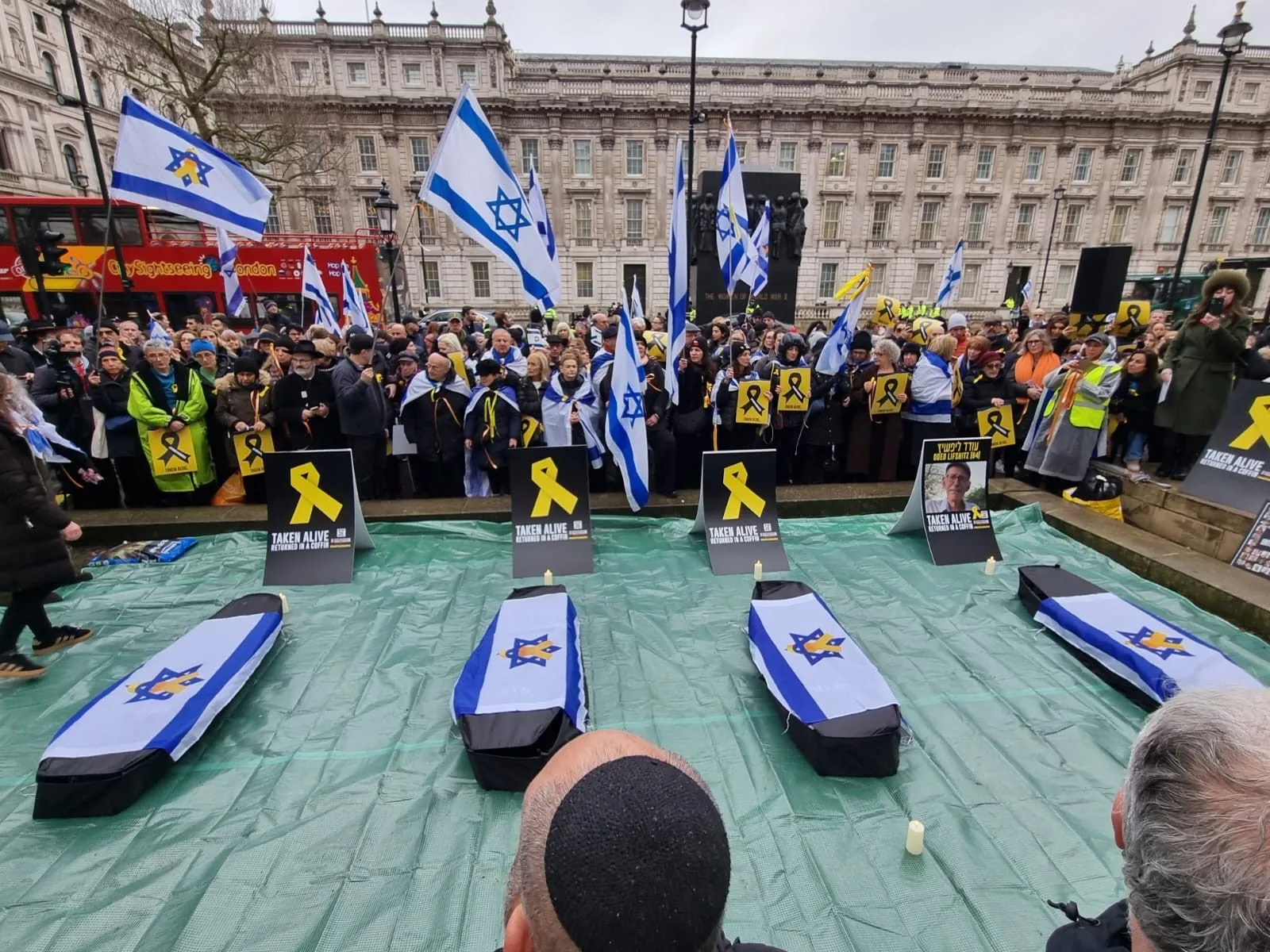
- We stood on Victoria Road with fifteen people and eighty police
Victoria Road, central London, March 2024 · Itai Galmudy
- Title
- What is this action actually for?, Answer The Hate
- Source
- https://answerthehate.com/guides/what-is-this-action-for/
- Jurisdiction
- Applies to: Applies everywhere
- Last reviewed
- Last reviewed 30 July 2026. Check the website for a newer version before relying on this sheet.
- Status
- General information, not legal advice. Published by Stop The Hate.
Next
Where this page sits in the track- 01EVT · Organise the actionHow to find out the law where you areA method rather than a summary. What to look for, who to ask, and which questions matter, wherever in the world you are organising.
- 02EVT · Organise the actionChoosing the format, the place and the timeA vigil, a rally, a march and a stall do different jobs and carry different risk. Then the calendar, which on this subject rules out more dates than the diary does.
- 03EVT · Organise the actionRisk and safety planning before you announce anythingNinety minutes with a sheet of paper, before the date is public, that decides what happens on the day. The grid is printed here twice, filled in and blank.
- 04EVT · Organise the actionRunning the day, from the six roles to a hostile encounterThe roles a public event needs, why whoever leads it must not also be speaking, the procedure for the moment somebody starts filming faces, and why disengaging is almost always right.