From the ground
We stood on Victoria Road with fifteen people and eighty police
Victoria Road, central London, March 2024
By Itai Galmudy · Published 7 August 2026
For months the marches through central London were called a policing success because nobody was showing up against them. This is what happened the first time an Israeli flag did.
- Anti-antisemitism
- Israel advocacy
- protest
- organising
- police
- safety
- getting started
This is what happened to one contributor in March 2024. It is not maintained and it is not guidance, and it is not marked out of date, because it is not trying to be current. Things will have changed. For what we keep checked and correct, read the guides.
- What was tried
- Standing on the route of the central London marches with Israeli flags, to end the stretch when the policing looked peaceful because one side had simply stopped turning up.
- What it cost
- Nobody kept track. Nobody was keeping a ledger in the first year. What the model does cost now is legal aid for anyone arrested at one of our actions, which is the part that turns a crowd into an organisation.
- Did it work
- It worked
I grew up in Modiin. My father’s family came to Israel from Egypt. My mother’s came from Algeria. So much for “go back to Europe”.
There are four of us, three brothers and a sister. My grandfathers served in the IDF. My father served. My brothers served. I served. Nobody in my family ever sat down and made that decision. It was simply what you did when your turn came.
My father had one rule about the country. To walk it is to know it. So he walked us across it, north to south, year after year, until the map stopped being a map and became a set of places I had actually stood in. That is where my Zionism comes from. Not from a slogan. From the ground.
I moved to London after Operation Protective Edge and I have run a pub in the centre of town ever since. For years I had almost nothing to do with the Jewish or Israeli community here. I worked, I raised my two children, and I stayed out of it.
That ended on 7 October 2023.
I joined the 7/10 Human Chain Project, campaigning for the release of the hostages. It was there that I met Yochy Davis. Out of those conversations came Enough is Enough, which became Stop The Hate UK.
The flag
A few of us were restless about the police response to the marches. Week after week the marches came through central London and week after week we were told the policing operation had been a success. The police were patting themselves on the back about what a great job they were doing, because they were keeping the peace.
We knew why it looked peaceful. Nobody was waving an Israeli flag. There was no confrontation because one side had simply stopped showing up. So we asked ourselves what would happen if they did see an Israeli flag. Yochy and I talked about it for a long time, and then we decided to go for it.
Elliott Franks
I cannot tell you how many people tried to stop us. Not the other side. Our own. We were told we were crazy, that we would damage the Jewish community’s relationship with the police, that we would harm the reputation of Anglo-Jewry. To which we said, we realise you Brits have a way of doing things, but let us try the Israeli way.
We understood the caution. We did not want to put anybody at risk. But we were not willing to sit through another weekend where Jews were too frightened to come into central London on a Saturday.
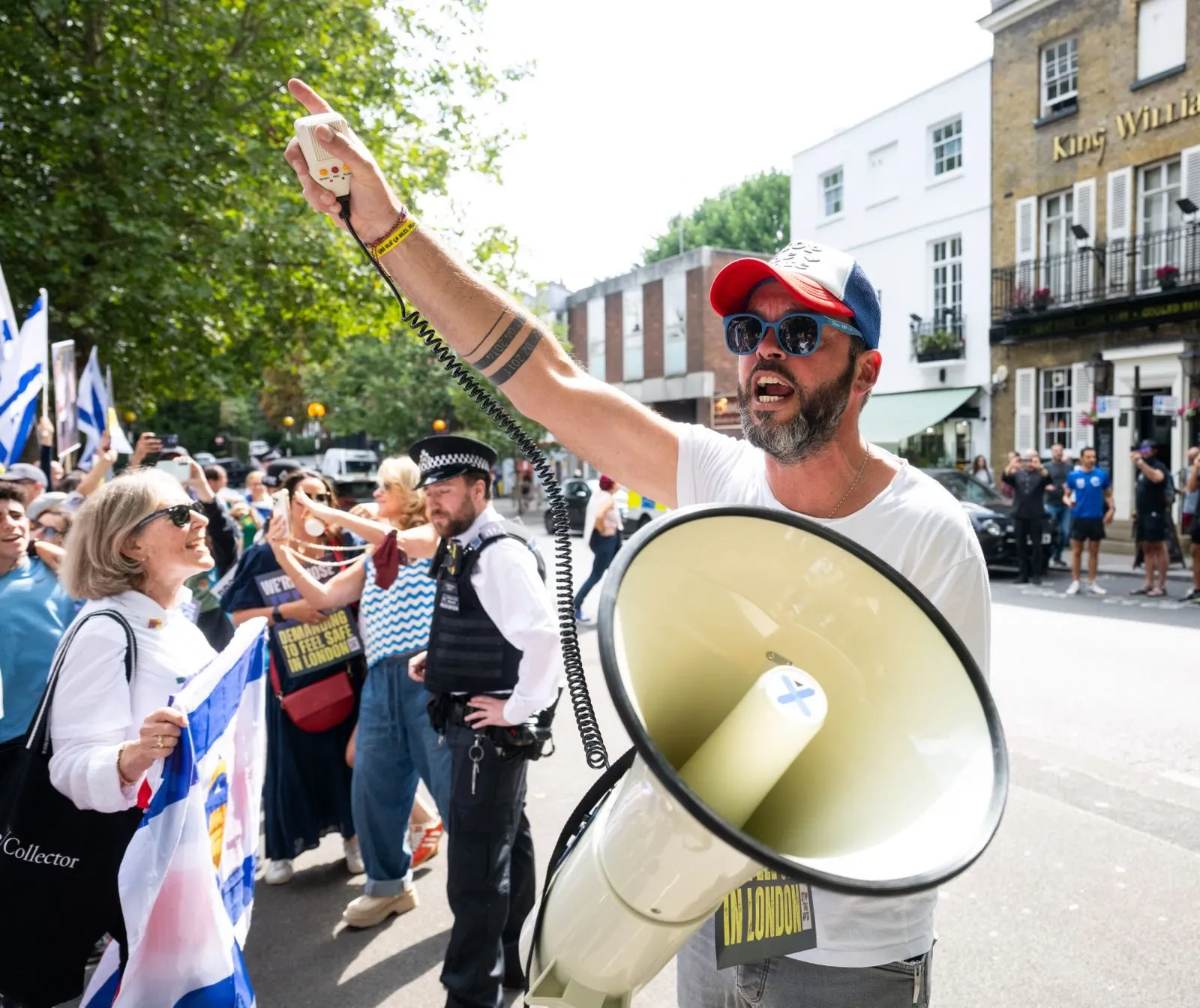
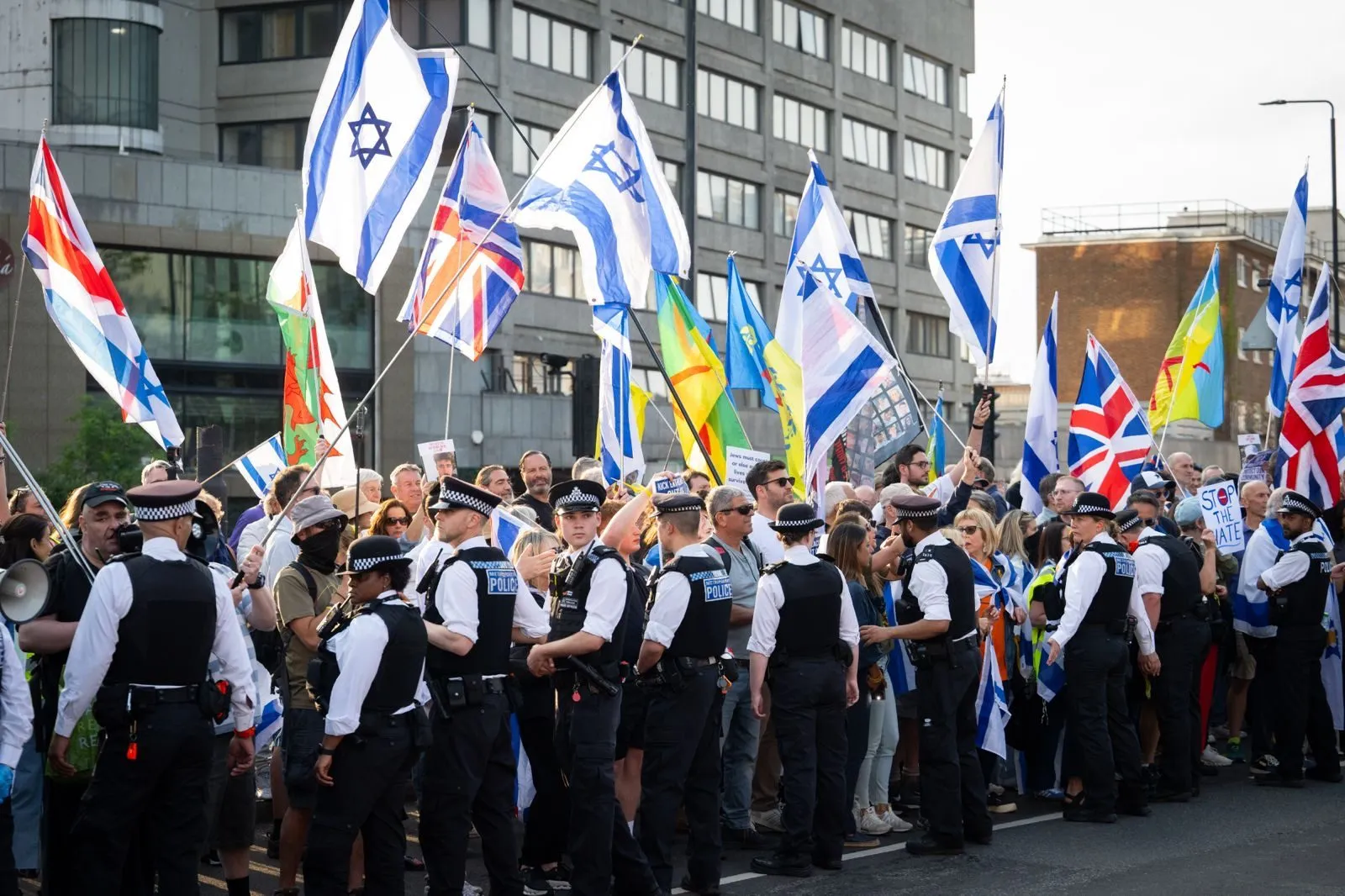
On 9 March 2024 we stood on Victoria Road and countered the hate for the first time. There were about fifteen of us, protected by eighty police officers. That ratio tells you everything about how the situation had been allowed to develop.
Elliott Franks
What we learned
We set out to be as bold and as contentious as we could be, because we worked out very early that the only people who get things done are the ones who are vocal and unapologetic.
Look at the other side and what they are doing. We did not invent anything. To a certain extent, we copied them. We decided we were going to be everywhere, and that every time they came out, we would be there too. It does not matter if there are twenty of us or two thousand of us. It is about saying, these are our streets too.
Moaning on social media about the antisemitism on the demonstrations had got British Jews precisely nowhere. Politeness does not get Jews very far.
Politeness does not get Jews very far.
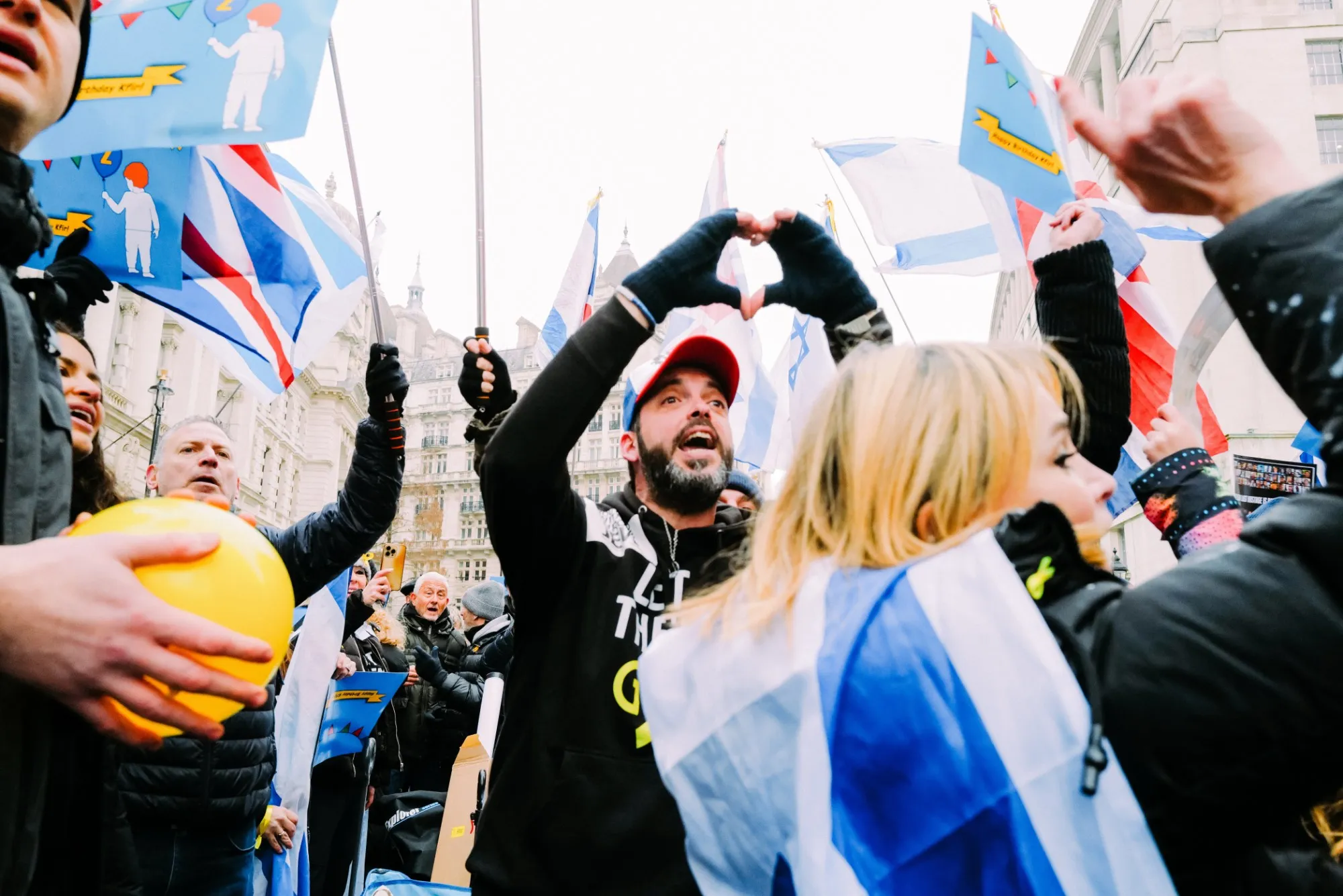
We have pursued them everywhere. Some weeks we run four or five events. We always bring music and we are always loud, because we quickly understood that they cannot stand it when we are happy in front of them. Nothing annoys them more than the sight of Jews enjoying themselves. It is unbelievable, and it works.

Elliott Franks
What we built
We started with fifteen people. We have now organised events with thousands, with a large group of dedicated volunteers and full legal aid for anyone arrested as a result of attending one of our actions.
That last part matters more than any of the rest. Anyone who stands with us knows they will not be left on their own afterwards. That is the difference between a crowd and an organisation.
Stop The Hate UK is now the largest Jewish-led direct action group in the country. We had two aims when we started and we still have the same two. Empower Jewish people to stand up for their own rights. Force the police to abandon the soft-hand approach to policing antisemitism.
If you are thinking about starting
Turn up. The first time is the hardest and there will never be a better moment than the next one.
Do not wait for permission from people whose entire job is caution. They are not wrong to be cautious, but caution is not a strategy, and nobody was ever protected by being quiet.
Build the boring things early. Legal observers, a database, lawyers on call, a plan for what happens if somebody is arrested. Courage without infrastructure only works once.
Courage without infrastructure only works once.
And bring the music. Let them see us happy.
These are our streets too.
What I would do differently
Build the boring things earlier. Legal observers, a database, lawyers on call and a plan for what happens if somebody is arrested. Courage without infrastructure only works once, and we were further into this than we should have been before that was true of us.
What I wish I had known before starting
That you do not need permission from people whose whole job is caution. They are not wrong to be cautious, but caution is not a strategy, and nobody was ever protected by being quiet. Almost everybody who tried to stop us was on our own side.