EVT · Organise the action· Stage 2, Prepare
Placards, banners and chants that work
Most campaign materials fail on legibility rather than on message. What is readable at distance, what photographs well, and how a chant actually gets learned.
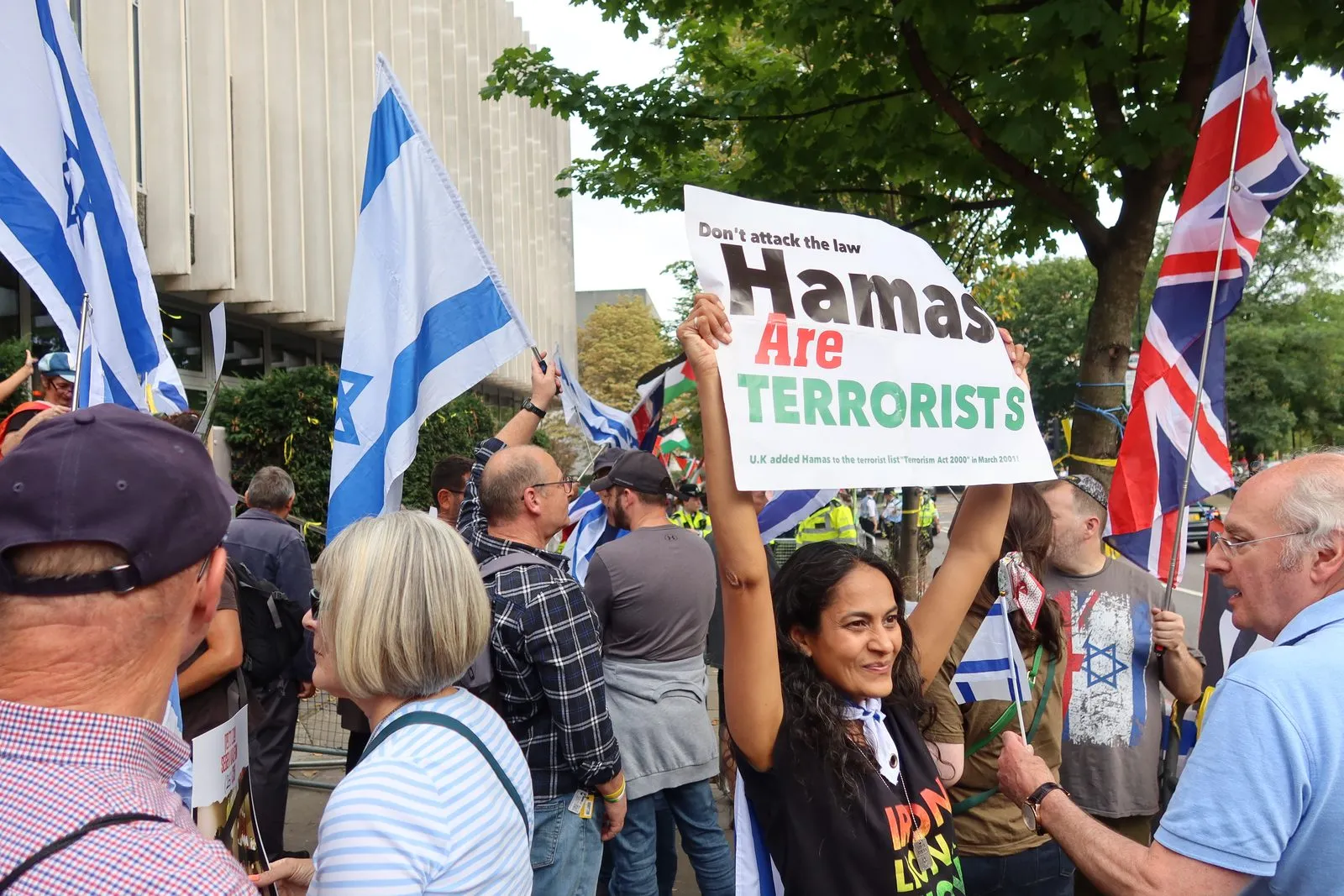
The short version
- Five words maximum on a placard. Three is better. If it needs reading, nobody reads it.
- Very high contrast, one weight of very large type, no thin fonts, no outlines, no gradients.
- Test every placard by photographing it from twenty paces and looking at it on a phone.
- A chant is learned by a crowd in two repetitions or not at all. Short, stressed, and with a clear response line.
- Decide in advance what is not going on a placard at your event, and say so when you publicise it.
What you need6 items
- Corrugated plastic board, one sheet per placard, because card does not survive rain or being carried
- Wide black marker pens, or a printer and paste, and nothing thinner than a chisel tip
- Parcel tape and battens or dowel for handles, taped along the full width of the board rather than at one point
- A phone, for the twenty pace photograph that is the only test that matters
- Your event's one or two written sentences on what is not welcome, agreed before anything is made and published when you publicise
- The response line of each chant, printed on cards small enough to hold in one hand, and the name of the person whose job it is to start them
Almost every placard at almost every event is unreadable. Not because the message is wrong, but because it was designed on a screen at arm’s length and then viewed from across a road, or in a photograph, at the size of a thumbnail.
This is a solvable problem, and solving it costs nothing.
Placards
Five words maximum, and three is better. The reader is walking past, or scrolling. They give you about one second. A sentence loses.
One idea per placard. If you have two ideas, make two placards. Variety across a crowd reads as many people who each mean something. A crowded placard reads as somebody who could not decide.
Very large, very heavy type. Fill the board. The most common mistake is type at a polite size with a generous margin, which is exactly wrong. Aim for letters that fill the height of the space, in a bold or black weight. Nothing thin, ever.
Maximum contrast, and only two colours. Black on white and white on black are the two best options ever devised and they are free. Coloured type on a coloured background loses half its legibility. Outlines, shadows and gradients lose the rest.
No script fonts, no all-italic, and be careful with all capitals. Capitals are fine for two or three words and become a solid grey block after that.
Test it. Print or write it, prop it up, walk twenty paces back, photograph it, and look at the photograph on your phone. If you cannot read it instantly, it fails. This takes two minutes and eliminates most of the problem.
Think about the back. In a march, half your placards face away from the people you are trying to reach. Two sided placards are twice as useful for the same carrying effort.
Materials. Corrugated plastic board survives rain and being carried. Card does not. Attach a handle with tape along the full width rather than at one point, or it will fold in wind. Check whether your event has any restriction on sticks and poles, because many do.
Banners
Banners are read at longer distance and photograph as the caption of your event, so they carry the one line you most want quoted.
Keep them short, make them wide rather than tall, and put your words in the middle because the ends get folded or held low. Cut wind slits if the banner is large, or two people will spend the whole event fighting it instead of listening. Weight the bottom edge.
If you are hoping for press coverage, the banner is the thing that will appear in the photograph. Write it accordingly, and put nothing on it you would be unhappy to see under a headline.
Chants
A chant is a piece of practical design, not a piece of writing. It has to be learned by hundreds of people who have never heard it, in the open air, in two repetitions.
Use call and response. One voice gives the line, the crowd gives the answer. People will join a response before they will join a solo. Print the response line, not the call line, on anything you hand out.
Keep the response to four or five syllables with a strong stress pattern. It should be obvious where the beat falls without anybody explaining it. If people have to think about the rhythm they will not join in.
Short lines and no clauses. Anything with a subordinate clause dies immediately.
Give somebody the job of leading them. Chants do not start on their own. They start because one person with a loud voice and no embarrassment begins, and keeps going through the awkward two seconds before anyone joins. Choose that person in advance and tell them it is their job.
Do not run more than five or six across an event. A crowd can hold a handful. Beyond that you get fragments competing with each other, which sounds like disorder even when everyone is friendly.
Leave silence in. Continuous noise wears a crowd out faster than organisers expect, though we have not measured it. Silence between chants makes the next one land, and a deliberately silent stretch at a vigil is more powerful than anything you could shout.
Decide what is not welcome, before the day
This is the uncomfortable part and it is the most important paragraph here.
At any open event, somebody will bring a placard you did not approve and would not have chosen. Sometimes it is a misjudgement, sometimes it is somebody attaching their own cause to your crowd, and occasionally it is somebody trying to damage you.
Whatever appears will be photographed, and it will be attributed to you rather than to them.
So decide in advance what is not acceptable at your event, write it in one or two plain sentences, publish it when you publicise the event, and brief your stewards on what to do. The doing is almost always a quiet conversation rather than a confrontation: most people asked politely will put a placard down.
Having decided this beforehand is what lets a steward act in the moment without needing permission, and it is what lets you say afterwards, truthfully, that you had a standard and applied it.
What the steward says when it happens
Give these to whoever is doing the job, before the day. Read out cold, in front of a camera, they are the difference between a quiet word and a scene.
“That one isn’t something we’re carrying today. Would you mind putting it down?”
“You’re welcome here. The placard isn’t. I’d rather have you than have the argument.”
“We published what we would and wouldn’t have on the day. This is that, and it’s nothing personal.”
“I’m not going to debate it with you here. Come and find me afterwards and I’ll explain properly.”
When the rules get ignored, which is most of the time
Everything above is what good looks like. What actually turns up is a crowd carrying placards made at home the night before, none of them tested, several of them unreadable, and their makers pleased with them. That is the normal case rather than the failure case, and an organiser who has planned only for compliance has planned for an event that does not happen.
An unreadable placard is not a problem you solve on the day. It costs you a photograph and nothing else. Leave it alone. Fixing it costs you the person holding it, and people are harder to replace than boards. The only ones you act on are the ones you published a sentence about.
Bring spares, and swap rather than confiscate. Six good placards in the boot, made properly and readable, are the single most useful thing you can carry. “Here, have this one, it’s better than mine” gets a board down without anybody losing face, and it is the same move as a refusal with none of the cost. You cannot take anything off anybody and you should not try.
A refusal done badly photographs worse than the placard did. The failure mode of this entire page is a steward and a supporter arguing in front of a camera about a piece of plastic. If the conversation is going that way after two sentences, stop having it. The lines above are written to be said once and then left.
The chant you did not choose will start. Usually from somebody who means well and has heard it elsewhere. Do not correct them and do not argue, because a correction shouted across a crowd is heard as a row and lands in the same clip. Start one of yours instead, loudly, within about ten seconds. A crowd follows whoever starts something, not whoever objects to something, which is why the person given that job in advance is the whole of your control over what gets chanted.
The banner will try to fly. If you cut no wind slits, two people will spend the entire event fighting it and hear none of it. If it is already up and pulling, roll the top edge down by a foot and carry it lower. A lower banner that is readable beats a taller one at forty-five degrees.
Afterwards, count. At the debrief, one number: how many of your placards were readable in the photographs. Not how they looked in the hall. That number is the only measure this page has, and it is the one that improves the next event.
And if something got photographed that you would not have chosen, say once, in one sentence, that you published a standard and applied it, and then stop. A second statement is read as a second incident.
One placard, twenty paces, tonight
Fill in the blanks272 words
Two questions from memory. What is the maximum number of words, and what is the test that tells you whether a placard works? And what are the one or two sentences your event will publish about what is not welcome on the day?
Then the cue, because a plan without one is an intention. “Closer to the day” is not a cue. It is the sentence that produces twelve untested placards at eleven the night before. Write these four down with your own days in them.
Action. If it is tomorrow evening and the table is clear, then I will make one placard, prop it up, walk twenty paces back, photograph it and look at the photograph on my phone. One placard, not twelve.
If it fails the test, then I will not rescue it. I will make a second with two fewer words and heavier letters and throw the first away, because every rule on this page was learned by somebody trying to save a board that was already lost.
The day, for the placard you did not choose. If one turns up that is only unreadable, then I will leave it entirely alone. If it is one of the things we published a sentence about, then I will offer a swap from the spares before I ask anybody for anything.
And the obstacle, which is always the same one. If a chant starts that we did not choose, then I will not argue with the person who started it. I will start one of ours within ten seconds and keep going through the awkward two seconds before anybody joins.
- Title
- Placards, banners and chants that work, Answer The Hate
- Source
- https://answerthehate.com/guides/placards-banners-chants/
- Jurisdiction
- Applies to: Applies everywhere
- Last reviewed
- Last reviewed 30 July 2026. Check the website for a newer version before relying on this sheet.
- Status
- General information, not legal advice. Published by Stop The Hate.
Next
Where this page sits in the track- 01EVT · Organise the actionRunning the day, from the six roles to a hostile encounterThe roles a public event needs, why whoever leads it must not also be speaking, the procedure for the moment somebody starts filming faces, and why disengaging is almost always right.
- 02EVT · Organise the actionWhat the venue asks for before it says yesThe insurance certificate, their risk assessment form, the deposit and whose name is on the booking. Then the bank account, and the permit a collecting bucket needs.
- 03EVT · Organise the actionCapturing evidence properlyA nine-step procedure for recording an incident so it still works in six months, a six-word short form for the street, and what to do when it happens on Shabbat.
- 04EVT · Organise the actionRisk and safety planning before you announce anythingNinety minutes with a sheet of paper, before the date is public, that decides what happens on the day. The grid is printed here twice, filled in and blank.