From the ground
What changed when quiet diplomacy stopped working
By Catherine Perez-Shakdam · Published 7 August 2026
Jewish advocacy in Britain was built on relationships raised privately and boundaries broadly understood. Both assumptions have gone, and an account of what that means for where advocacy now has to be done.
- Anti-antisemitism
- Israel advocacy
- discourse
- advocacy
- institutions
- antisemitism
- campus
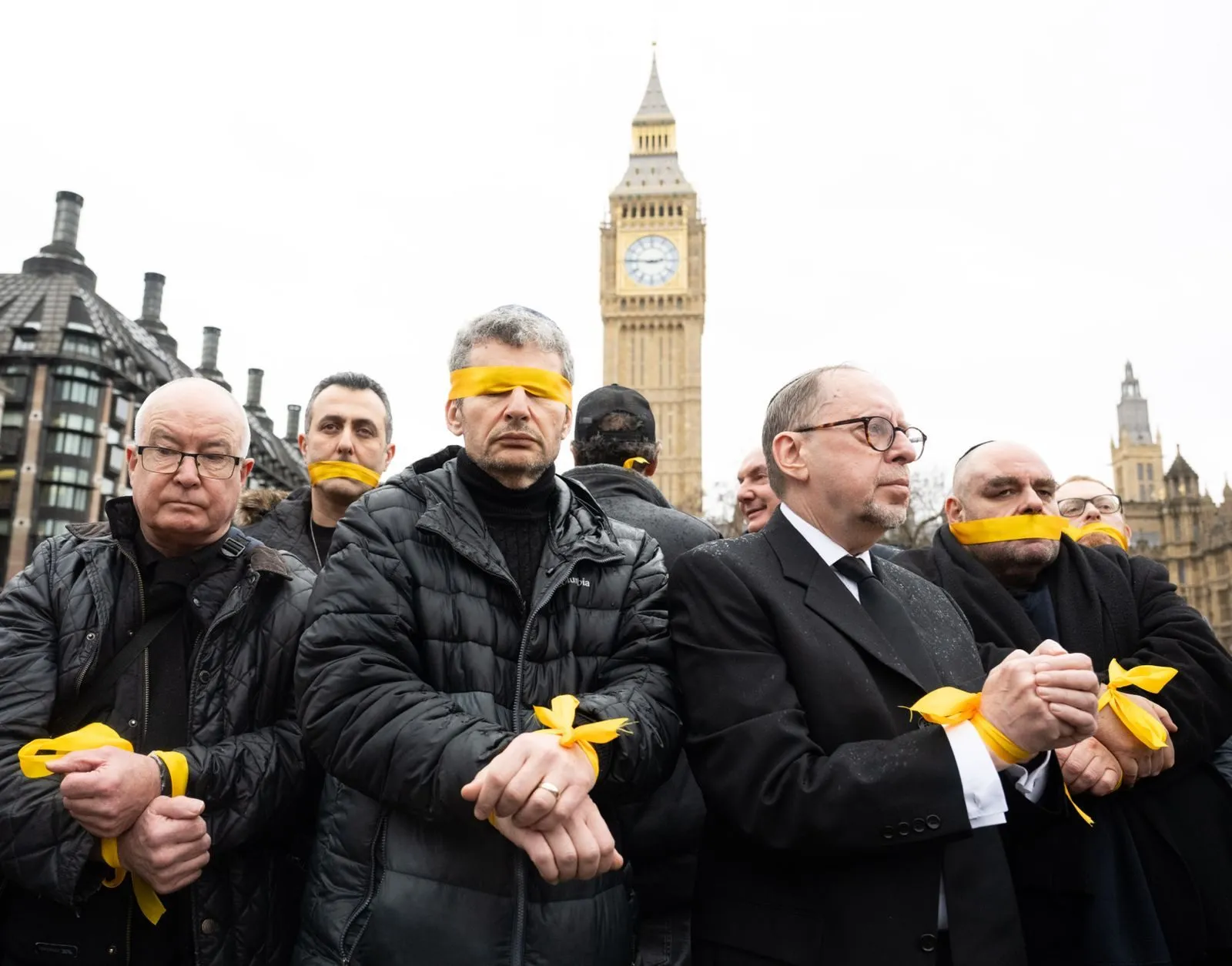
This is one contributor's own account. It is not maintained and it is not guidance, and it is not marked out of date, because it is not trying to be current. Things will have changed. For what we keep checked and correct, read the guides.
Advocacy is not a hobby. It is not something we pick up when convenient and put down when the room becomes uncomfortable. For me, it is a duty inherited from those who came before us and owed to those who will come after.
It is how a community that has so often been spoken about, rather than spoken to, insists on being heard on its own terms. It is how we refuse to let others decide which parts of our identity are acceptable, which parts of our history are inconvenient, or whether our fears are serious enough to merit attention.
That responsibility has become harder to ignore.
The political ground is shifting, and antisemitism has shifted with it. It has learned the language of the age.
It does not always arrive in the crude vocabulary of the past. Increasingly, it borrows the language of human rights, anti-colonialism and progressive politics. Ideas that would be recognised as discriminatory if directed at another minority are sometimes treated as respectable when Jews are on the receiving end.
That distinction matters.
Israel, like any other country, can and should be criticised. Israelis themselves disagree fiercely about governments, borders, settlements, security, religion and the character of the state. Zionism has never been a single political programme.
The problem begins when Jewish self-determination alone is treated as uniquely illegitimate. When Jewish institutions are expected to denounce Israel simply to be allowed into the room. When Jewish students are made answerable for the decisions of a government thousands of miles away. When “Zionist” becomes a word people use with the same contempt once reserved for “Jew”, while insisting that the distinction absolves them of prejudice.
That is where the terrain has changed.
In some institutions, anti-Zionism has become a permission structure through which older prejudices can be repackaged in modern political language. Jews are increasingly expected to prove that they are the acceptable kind of Jew before they are entitled to speak.
We can see the consequences on university campuses, inside professional associations, in cultural institutions, in local politics and increasingly in mainstream political debate.
It would be a mistake to meet this with methods designed for another era.
For decades, much Jewish advocacy relied on quiet diplomacy. Relationships were cultivated behind closed doors. Concerns were raised privately. Community leaders worked on the assumption that established institutional channels, combined with reasoned argument, would usually be enough to stop political disagreement spilling into outright discrimination or intimidation.
There was wisdom in that approach. There still is.
But it rested on another assumption: that certain boundaries were broadly understood. That if they were crossed, institutions would recognise what had happened and act.
We can no longer rely on that.
Today, the definition of antisemitism itself is contested. Hostility towards Zionism can be presented as morally virtuous even when, in practice, Jewish students, employees or organisations are being singled out. Jewish concerns are too often treated as political inconvenience before anyone bothers to examine the evidence.
That changes what advocacy must look like.
We need to be where legislation is written, where university policies are adopted, where professional standards are set and where public money is allocated. We need to sit across from the officials drafting policy and stand in front of the politicians casting votes.
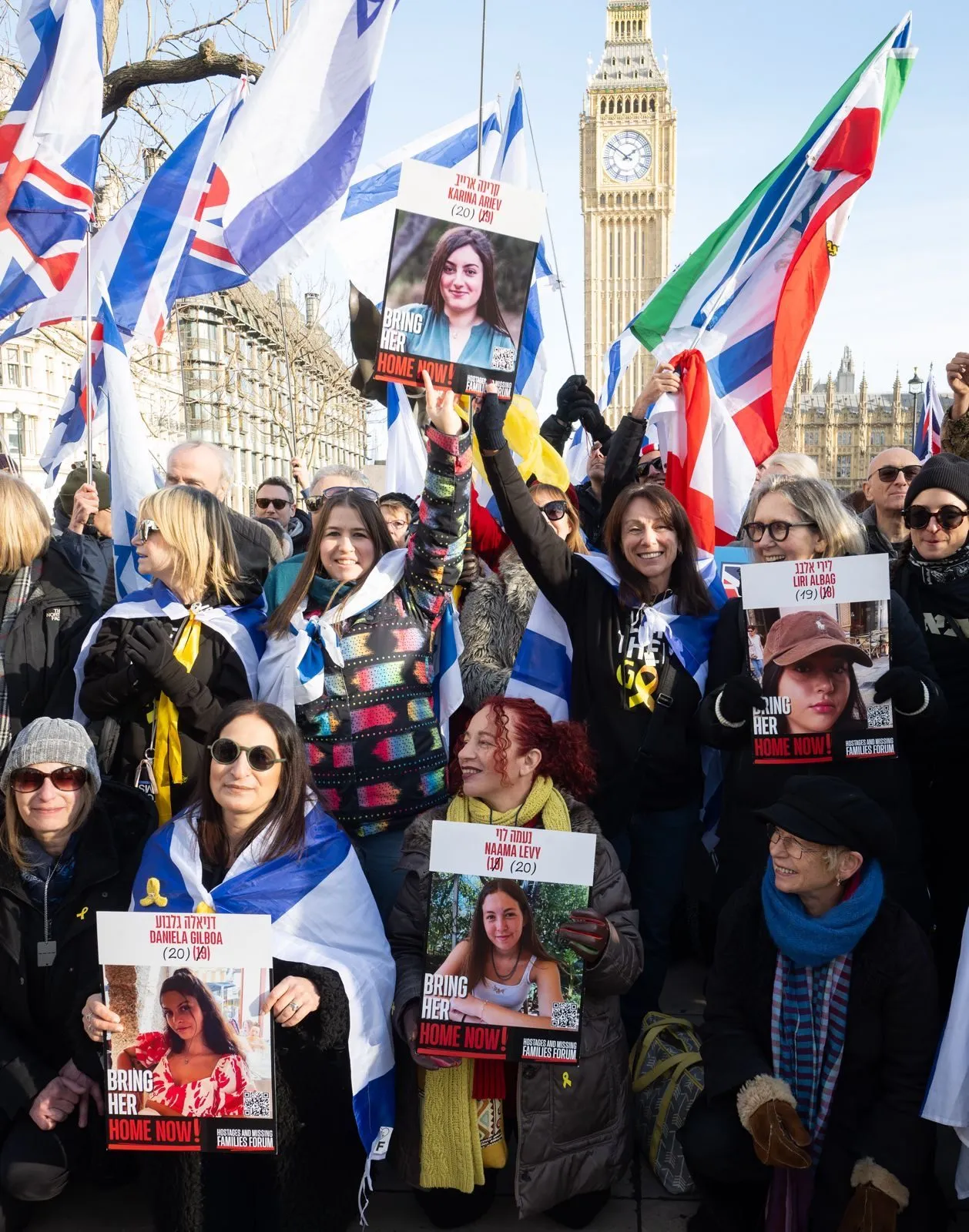
Elliott Franks
And we need to do it consistently.
That means speaking not only to politicians who already agree with us, but to those who do not. The undecided. The sceptical. The badly informed. The people who may never have had to think seriously about Jewish life in Britain at all.
There is little value in speaking only to rooms in which everyone already nods along.
The difficult room is usually the one that matters.
The difficult room is usually the one that matters.
Law matters too.
Our legal framework has to be capable of distinguishing between political expression, however offensive, and conduct that crosses into intimidation, harassment, discrimination, incitement or threats. Those distinctions have to remain precise. Freedom of expression is fundamental to democratic life, including speech that Jews may find offensive or hostile.
But freedom of expression cannot become a convenient excuse for institutions to neglect their responsibility to protect people from unlawful discrimination or intimidation.
We should demand precision from ourselves as well.
Calling every criticism of Israel antisemitic weakens the argument. Showing exactly where a line has been crossed strengthens it. What happened? Who was excluded? Which policy was applied differently? What duty was breached? What remedy is available?
Serious advocacy starts there.
Evidence matters.
So does courage.
There is enormous pressure now to soften language in order to remain acceptable. Sometimes restraint is useful. Sometimes diplomacy achieves more than confrontation. There is no virtue in being provocative for its own sake.
But there is a point at which restraint becomes fear.
The moment we begin asking whether speaking plainly will make us unpopular, we risk allowing other people’s discomfort to dictate the limits of our participation in public life.
Silence has rarely protected Jews.
Silence has rarely protected Jews.
Nor has making ourselves smaller in the hope that hostility will eventually move on.
Every time we retreat because an argument becomes uncomfortable, we teach those applying the pressure that pressure works. Every time we remain quiet when a Jewish student is excluded, a speaker is cancelled, an institution applies a discriminatory standard or a politician crosses from criticism into prejudice, another boundary is tested.
Then another.
The answer is steadiness.
Our voices need to be clear, informed and difficult to dismiss.
And this responsibility cannot belong only to professional advocates.
A community cannot outsource its political future to a handful of organisations and then pay attention only when something goes badly wrong. Advocacy works when people understand what is being fought for, why it matters and what is at stake if nobody turns up.
Every generation of Jews has inherited something built by the people before it: schools, synagogues, charities, political relationships, legal protections, institutions strong enough to survive difficult periods.
Those things did not appear by accident.
Someone built them. Someone fought for them. Someone sat through the meetings, wrote the letters, raised the money, challenged the decision, spoke when remaining silent would have been easier.
We owe the next generation the same seriousness.
We are deciding whether our children will walk into universities, workplaces and political institutions openly and confidently as Jews, or whether they will once again learn to calculate the cost of visibility.
That is why our methods have to change.
The political environment has changed. The language of hostility has changed. The institutions through which influence is exercised have changed. Advocacy has to keep pace.
The purpose remains simple.
A Jewish community should never accept that its right to speak, organise, participate in public life and shape its own future can be granted or withdrawn according to the political fashion of the day.
We do not need permission to be heard.
But we do need the courage to speak.