From the ground
My generation was not on the streets
By Max Royston · Published 7 August 2026
Go and look at the photographs from the first counter demonstrations and count the people under thirty-five. Two years on, from somebody who had never once stood on a street in this country for anything Jewish.
- Anti-antisemitism
- Israel advocacy
- organising
- protest
- discourse
- young people
- advocacy
This is one contributor's own account. It is not maintained and it is not guidance, and it is not marked out of date, because it is not trying to be current. Things will have changed. For what we keep checked and correct, read the guides.
I am thirty years old. Two years ago I had never once stood on a street in this country for anything Jewish.
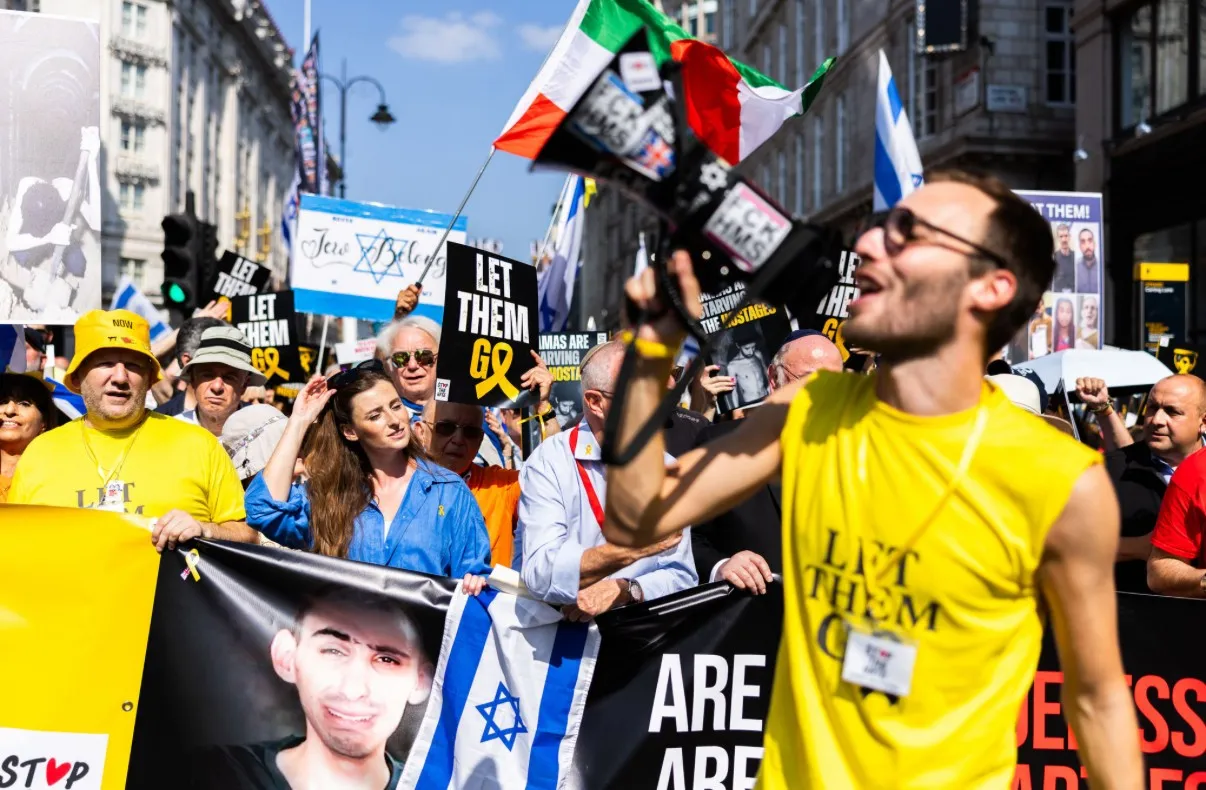
Neither had almost anyone I grew up with. That is the fact I want to start with, because it is the one that should worry this community more than any other. Go and look at the photographs from the first counter demonstrations. Count the people under thirty-five. My generation was not there.
I was Jewish, but I wore it lightly. The kind of Jew who watches Curb, has Friday night dinner with the family, and turns up at synagogue twice a year for Rosh Hashanah and Yom Kippur. What activism I had went somewhere else. I volunteered for Switchboard and gave most of my energy to the LGBTQ+ community rather than the Jewish one. Nobody would have described me as involved, and nobody would have been wrong.
I was in Tel Aviv on 7 October. I woke up to a different world.
I came home to Britain expecting sympathy. I found hatred, in the open, on streets I had walked my whole life. And I found a community whose first instinct was to make itself smaller. Cover your kippah. Take off the Magen David. Stay out of central London on a Saturday. Every word of that was said with love, by people who wanted us safe. All of it rested on the same idea. That our visibility was the problem to be managed.
Understand what that instruction does to someone my age.
A generation of British Jews is drifting away from Israel. Not through malice, and mostly not through politics. Through exhaustion, through embarrassment, and through the simple fact that nobody has offered them anything to hold on to except a crouch. You cannot recruit anyone to a crouch. If the only thing being Jewish in public asks of you is that you be less noticeable, a generation with every other option available to it will quietly take one of those instead. That is what is happening right now, and it is happening in silence.
You cannot recruit anyone to a crouch.
Stop The Hate was the answer to that, and it is why I am still here two years on. We go anywhere. We stand tall, we are visible, and we make noise. No trembling knees.
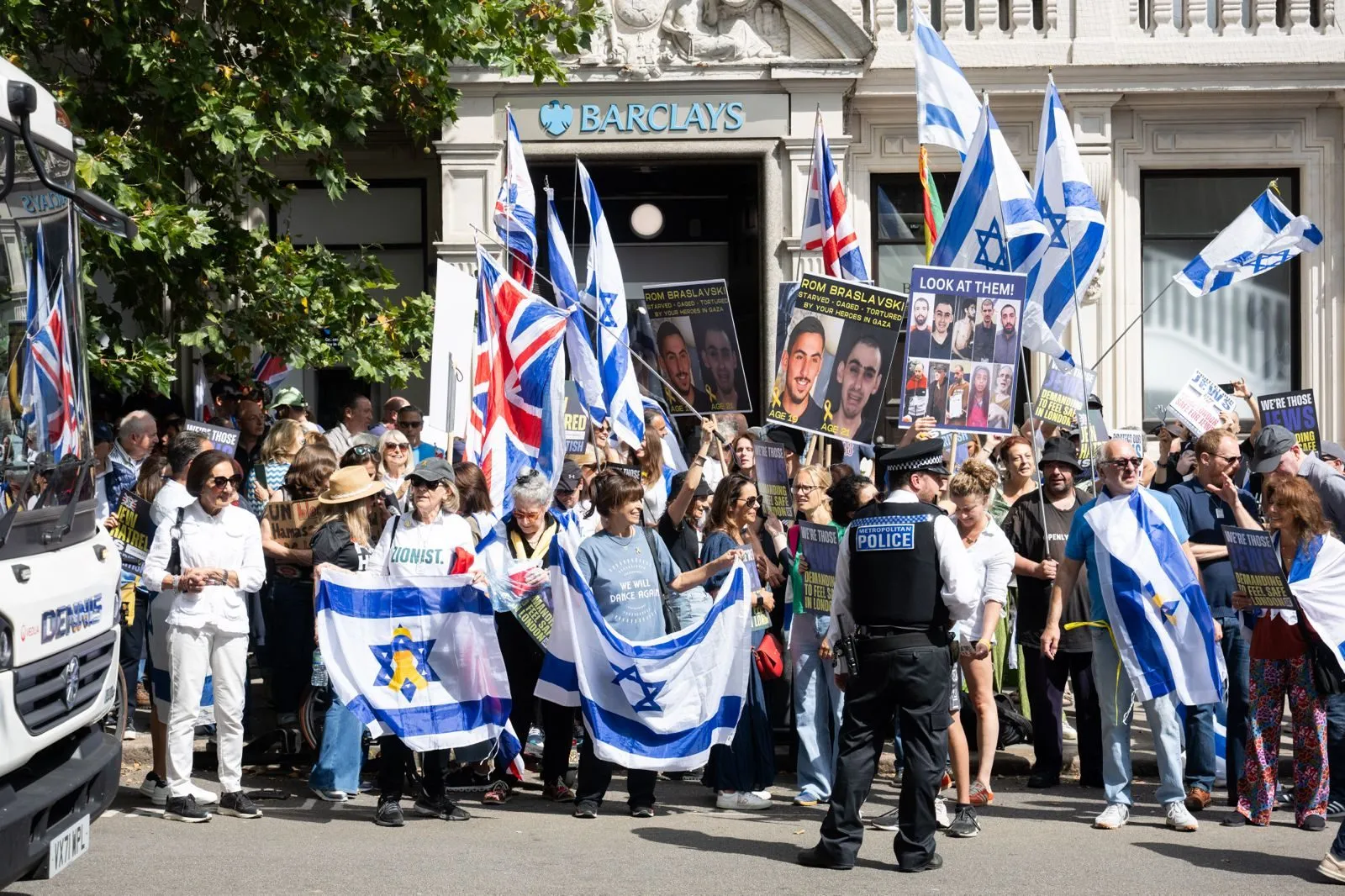
My first time was outside Barclays in Soho. There were about a hundred and fifty of us and around a hundred of them. We had brought speakers. They shouted and we sang, and after a while the only thing anyone on that street could hear was Am Yisrael Chai. Then they went. One by one, until the pavement they had come to occupy was ours.
Elliott Franks
I had spent my whole life being Jewish in private. That was the first hour I ever spent being Jewish in public, and I have not stopped since.
Standing on those streets week after week taught me what I could not see from home. The marches were policed permissively. Chants and placards that would have brought arrests in almost any other setting brought nothing at all. That builds a culture of impunity, and impunity does what it always does.
Look at where it has got us. In the year before 7 October, CST recorded an average of 154 antisemitic incidents a month. In 2025 the average was 308, exactly double. 2025 was the third year, not the spike year, and the total went up rather than down, from 3,556 to 3,700. For the first time in CST’s records, every single month of the year passed 200 incidents. Damage and desecration of Jewish property hit 217 cases, the highest ever recorded. And in October, Melvin Cravitz and Adrian Daulby were murdered at their synagogue on Yom Kippur, in the first fatal antisemitic terrorist attack in Britain since CST began counting in 1984.
None of that was inevitable. It is what happens when the cost of anti-Jewish hate is allowed to fall to nothing.
So here is what I think we get wrong, and I include myself in the we.
We have built our communal strategy on relationships. With government, with the police, with the institutions of this country. Those relationships are real, they have delivered real things, and anybody who waves them away has not done the work. But there is a pattern to them. When the choice comes between preserving a relationship and spending it, the relationship usually wins. We are careful. We do not want to be difficult. We think about how we will be received next time.
That is not influence. That is access. A relationship you are never willing to spend is a pleasant thing to have and it changes nothing.
That is not influence. That is access.
We are entitled to make demands. Not requests, not representations. Demands. We are British Jews, we belong to this country, we love this country, and we hold exactly the same rights as everybody else in it. Asserting them is not ingratitude and it is not bad manners. Keeping our heads down has never once got us anywhere, and my generation can tell the difference between dignity and management.
Everything we have done comes back to one principle. Refuse to be edged out of space.
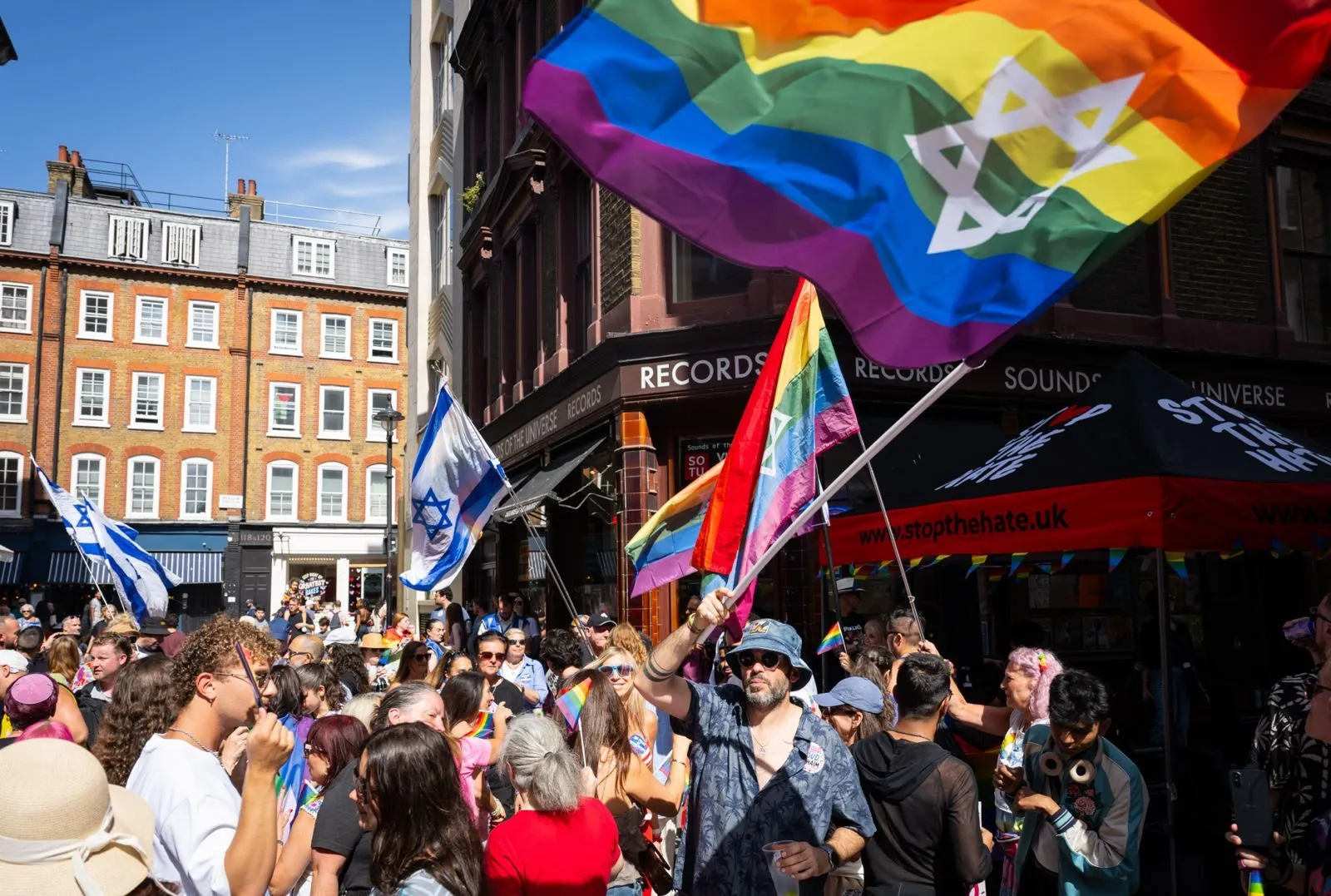
At Swiss Cottage we would not accept that a hostile protest simply had to sit where the community lives, and it moved. At Pride, after two years in which LGBTQ+ Jews had been effectively shut out, we stood in Soho and did not move. Then we walked those Jews back into the parade they had been excluded from.
Elliott Franks
That day mattered to me more than any other, and not only because of who I am. It was the clearest proof I have that this works. We did not negotiate our way back in. We stood there until the room came back to us.
Once you leave a room, the microphone belongs to whoever stayed. Nobody answers for you. Nobody puts your side. The version of you discussed in your absence is the one that sticks, and you cannot be defended from a place you are not standing in.
There is another half to this, and we talk about it far less than we should. We are polarising, and it is accelerating. There are Jews in this country who reach people I will never reach, in rooms I will never be invited into, and a community that starts treating difference as disloyalty ends up in a smaller and smaller room. The young go first, because they have the most exits available to them. Standing up to our enemies and holding on to each other are not competing projects. Neither one works without the other.
The last thing is the one we barely attempt.
We spend nearly all our energy answering accusations and almost none making the case. For British Jewry, for what this community has built in this country, for our values, and for Israel. You cannot ask a generation to defend something when nobody has ever put the positive case for it to them. A community that only speaks in response to attack has handed its opponents the right to choose every subject.
None of this is mine. Stop The Hate is Itai and Yochy, who started it. It is Lori. It is Moshe, who builds everything technical we depend on. It is Hayley, Haya, Jack and Deborah on production, who make sure that when we turn up we look and sound like people who mean it. It is an organisation of volunteers, and it works because a few hundred people decided to be uncomfortable on a regular basis, week after week, for two years.
I did not grow up doing this. That is the point. If someone who wore it lightly can end up on a street in Soho refusing to move, so can the rest of my generation, and this community needs them far more than it currently admits.
The generation that was not on the streets has to become the generation that will not leave them.